
Every May, millions of parents across India face the same quiet dilemma: two months of summer holidays, restless children, and the looming question — what do we do with all this time? Screen time balloons, sleep schedules dissolve, and by the third week, even the most patient parent is running low on ideas.
A well-structured summer camp for kids solves most of this at once. But here is what most camp brochures won’t tell you plainly: not every summer programme is equally safe, equally enriching, or equally worth your child’s precious eight weeks. Before you book a spot anywhere, it helps to know exactly what a genuinely good camp looks like — and which red flags to watch out for.
This guide covers every dimension that matters: safety standards, the right mix of summer camp activities, age-appropriate programming, and the questions every parent should ask before enrolling.
Why a Summer Camp for Kids Is More Than Just “Fun”
Parents sometimes hesitate before the word “camp,” picturing a loosely supervised holiday with a bit of craft and some running around. The reality of a well-designed programme is considerably different.
Developmental psychologists have long argued that unstructured play is vital — but so is guided exploration. A thoughtfully planned summer camp for kids provides exactly that balance: enough freedom for spontaneity, enough structure for genuine skill-building.
What Children Actually Gain from a Good Camp
- Social confidence — Navigating new friendships, group activities, and shared goals builds emotional intelligence faster than most classroom terms do.
- Physical coordination — Swimming, skating, yoga, and dance develop motor skills and body awareness in ways PE class alone rarely achieves.
- Creative thinking — Drama, storytelling, and unconventional art push children to solve problems in ways worksheets simply cannot.
- Mental resilience — Small challenges — losing a puzzle game, learning a new dance step — teach children to handle frustration with grace rather than tears.
“Give a child a structured summer and you give them a head start on September.” — a sentiment echoed by teachers across the country every year.
The Safety Checklist Every Parent Should Run Through
Before discussing activities, safety comes first. Here is a practical checklist you can use when evaluating any summer camp near you.
1. Verified Adult Supervision Ratios
For children under six (Nursery and KG), a trained adult to every six children is the ideal standard. For older groups (Classes 1–8), one adult per ten to twelve children is reasonable. Ask the camp organiser directly — any programme confident in its standards will share this number without hesitation.
2. First Aid and Emergency Protocols
A camp without a trained first-aider on the premises each day is taking unnecessary risks with children in its care. Look for camps that have a designated first-aid station, a written emergency protocol, and at least one staff member holding a basic child first-aid certification.
3. Secure Entry and Exit Management
Children should only be released to authorised guardians. Many well-run summer camps in Delhi/NCR now use ID-based pickup systems. If a camp has no clear policy on this, that is a concern worth raising directly.
4. Transport Safety
If the programme offers transport, confirm that vehicles are school-registered, drivers hold valid licences, and a female staff member accompanies younger children on the bus. Free transport is a meaningful value-add for families — but only when it is genuinely safe transport.
5. Food Hygiene Standards
Particularly relevant for camps that include “Fun with Food” sessions: any food prepared or consumed on-site should meet basic hygiene standards. Ask whether cooking areas are properly maintained, whether children with allergies are accommodated, and who supervises food preparation at all times.
Summer Camp Activities That Actually Develop Kids
A strong activity roster does two things simultaneously: it keeps children genuinely engaged, and it builds a transferable skill. Here is a breakdown of what a well-rounded curriculum looks like — and why each activity earns its place.
Activities Suited to All Age Groups
| Swimming A foundational life skill. Builds strength, breath control, and water confidence that lasts a lifetime. | Story & Drama Encourages imagination, public speaking, and empathy. Children who dramatise stories retain language noticeably better. |
| Fun with Food Simple supervised cooking and food exploration teaches measurement, patience, and the joy of making something edible. | Skill-Based Activities Targeted hands-on tasks — building, sorting, assembling — develop fine motor skills and task-completion habits. |
| Puzzle Activities Strengthens logical reasoning, spatial awareness, and persistence — qualities that carry directly into academic performance. | Matching Games Deceptively powerful for memory, pattern recognition, and concentration, especially in younger children. |
| Yoga & Meditation Teaches children to manage their emotions and physical energy — a genuinely underrated benefit for classroom behaviour. | Out-of-the-Box Art Non-standard materials and open-ended prompts push lateral thinking. This is creative problem-solving in disguise. |
| Movie Time When thoughtfully curated, film viewing builds narrative comprehension and stimulates meaningful group discussion. | Dance Improves coordination, rhythm, self-expression, and — particularly for shyer children — genuine stage confidence. |
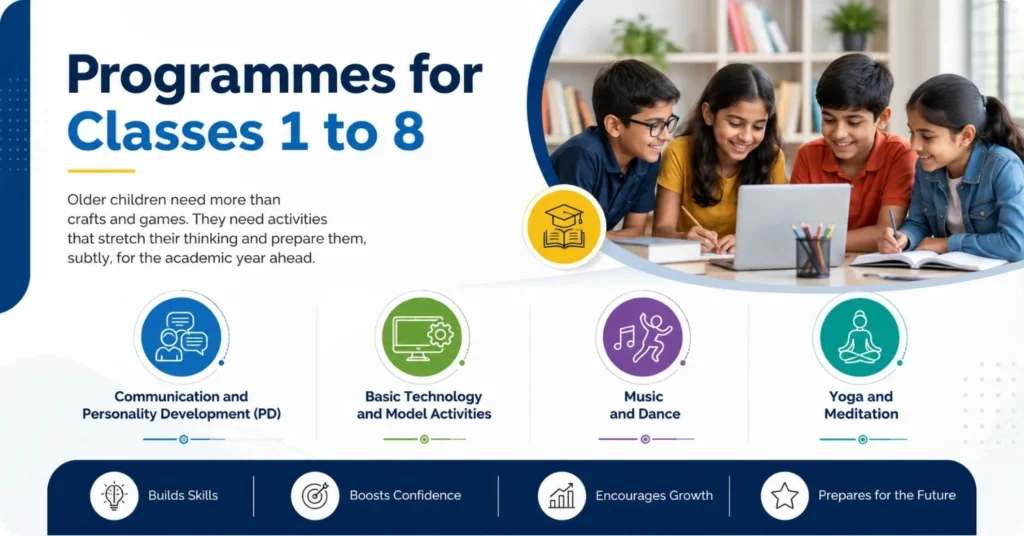
Programmes for Classes 1 to 8
Older children need more than crafts and games. They need activities that stretch their thinking and prepare them, subtly, for the academic year ahead.
- Communication and Personality Development (PD) — Group discussions, role-plays, and structured speaking exercises sharpen the skills that matter in every classroom and, eventually, every workplace.
- Basic Technology and Model Activities — Hands-on exposure to foundational tech concepts and building simple models develops curiosity about how things around them actually work.
- Music and Dance — A structured performance arts track that builds discipline, teamwork, and creative expression simultaneously.
- Yoga and Meditation — Taught at an age-appropriate pace; even ten minutes of guided breathing has measurable effects on focus and emotional regulation in school-age children.
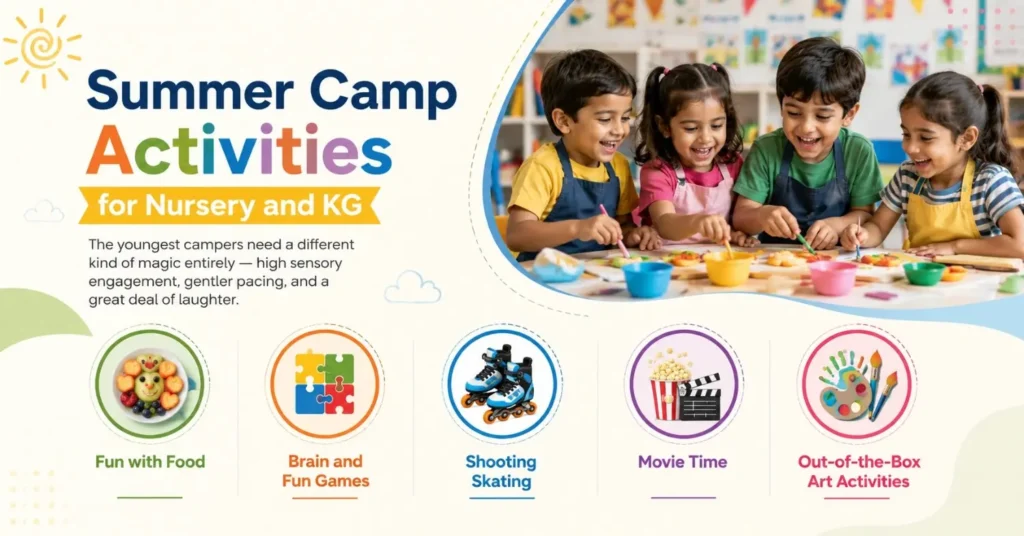
Summer Camp Activities for Nursery and KG
The youngest campers need a different kind of magic entirely — high sensory engagement, gentler pacing, and a great deal of laughter.
- Fun with Food — Simple sensory food play (sorting, touching, safe tasting) is ideal for preschoolers and develops early science curiosity.
- Brain and Fun Games — Age-appropriate puzzles, matching challenges, and group games that feel like pure play while building cognitive foundations underneath.
- Shooting Skating — A supervised, exciting physical activity that builds balance and spatial confidence from a young age.
- Movie Time — Short, carefully selected clips followed by simple discussion questions. Excellent for vocabulary and language development.
- Out-of-the-Box Art Activities — Finger painting, clay work, torn-paper collages — anything that gets little hands creating without the fear of doing it “wrong.”
A Note on Recognition
Good camps acknowledge achievement for every participant — not just the child who wins. Certificates and prizes awarded at the end of camp create a memorable moment, give children something tangible to feel proud of, and motivate fuller engagement throughout the programme. This detail matters more than most parents initially expect.
Finding the Best Summer Camp for Kids Near Me — What to Actually Look For
When parents search for a summer camp for kids near me, proximity and price tend to come first. Those are legitimate considerations, but they should be third and fourth on the list — not first and second.
Six Questions Worth Asking Before You Enrol
- What is the staff-to-child ratio, and are all staff background-verified?
- Is the curriculum age-differentiated — are Nursery/KG children in a separate track from Classes 1–8?
- Is free or affordable transport provided, and what safety measures accompany it?
- What happens if a child is unwell mid-camp? Is there a medical contact or written procedure?
- Do children receive certificates or formal recognition at the end?
- Can parents visit or observe sessions during the camp?
If a camp can answer all six of these clearly and confidently, you have found something genuinely worth considering.
Summer Camps in Delhi/NCR — What Sets the Good Ones Apart
The Delhi/NCR region has seen a significant rise in summer camp offerings over the last decade — ranging from high-end private academies to school-run programmes. School-run summer camps in Delhi/NCR tend to carry structural advantages: established facilities, trained staff already familiar with children, existing safety systems, and regulated premises that are accountable to parents.
For families in the Najafgarh and West Delhi area, proximity to a reputable school in Najafgarh Delhi that runs its own summer programme often means access to better infrastructure — proper classrooms, supervised activity spaces, clean facilities, and a school administration that is genuinely answerable to the community it serves.
How to Help Your Child Get the Most from Summer Camp
Enrolment is only the beginning. What happens before and after each camp day shapes how much your child actually absorbs from the experience.
- Ask specific questions at dinner — “What did you make in art today?” gets a far richer answer than “How was camp?”
- Display what they create — Putting a child’s art or certificate on the wall reinforces pride and motivates continued effort.
- Resist the urge to over-schedule — Camp should be the main event of the day, not one of six commitments. Children need genuine recovery time too.
- Stay in touch with organisers — A brief check-in midway through tells you how your child is settling and whether any simple adjustments might help.
- Be present for the certificate ceremony — The closing event matters to children far more than parents often expect. Attendance sends a powerful message about what you value.
Final Takeaway — Make This Summer Count
A summer spent well is not a summer spent waiting in front of a screen for September to arrive. The right summer camp for kids creates genuine memories, builds lasting habits, and often plants the first seed of a lifelong skill — whether that turns out to be swimming, performing confidently on stage, managing frustration through meditation, or simply learning how to make a new friend from scratch.
The markers of a genuinely good programme are consistent wherever you find them: clear safety standards, age-appropriate activities, qualified and caring staff, recognition for every child who participates, and practical logistics — like free transport — that make enrolment genuinely accessible for families. If you are a parent in West Delhi looking for exactly that combination this summer, Mata Nand Kaur Public School offers a thoughtfully designed camp covering everything from swimming and yoga to personality development and basic technology — with entirely separate age-specific tracks for Nursery/KG children through Class 8, certificates and prizes for all participants, and free transport included. It is the kind of programme where children leave knowing — and being — a little more than when they arrived. And that, ultimately, is the only standard that truly matters.
Frequently Asked Questions
Most well-structured camps accept children from Nursery age (approximately 3–4 years) onwards, with separate curricula for different age groups up through Class 8. The key is finding a programme that genuinely differentiates — a five-year-old and a twelve-year-old should not be doing the same activities.
Start with school-affiliated programmes in your area — they tend to offer better infrastructure and clearer accountability. Ask other parents in your neighbourhood for first-hand experiences, check whether transport is included, and always visit the premises before signing anything. Look specifically for camps that can explain their supervision ratios and emergency procedures without hesitation.
Sensory and movement-based activities are ideal for Nursery and KG children: fun with food, matching games, out-of-the-box art, skating, and short curated movie sessions. At this age, the emphasis should be on exploration and joy rather than performance or measurable output.
School-run summer camps in Delhi/NCR operating on registered school premises with trained, verified staff are generally the safest option. Always confirm supervision ratios, transport safety protocols, first-aid availability, and facility security before enrolling your child.
This varies by programme. It is worth specifically looking for camps that award certificates and prizes at a closing ceremony — it matters more than it might initially sound. Formal recognition reinforces a child’s sense of achievement and sustains their motivation throughout the programme.
Some school-run camps do provide complimentary transport, which can make a real practical difference for families. When evaluating it, confirm vehicle registration, driver verification, and whether a staff member accompanies children — particularly the younger ones. Free transport that meets these standards is a genuine benefit. Free transport without them is a risk worth declining.